FoE

What happens when we can detect nuclear subs?

New details of the AUKUS defence and security pact have revealed Australia will buy three second-hand US Virginia-class submarines early next decade (and potentially two more), subject to approval by US Congress.

Australia will also build a fleet of eight nuclear-powered SSN-AUKUS boats at Adelaide’s Osborne Naval Shipyard. The first will be delivered by 2042, with five completed by the 2050s, and construction of the remaining three going into the 2060s.

It’s estimated the program will cost between A$268 billion and A$368 billion over the next three decades.

Make no mistake. Modern submarines, especially nuclear-powered ones, are one of the most potent and effective weapon systems in today’s world. That is, until they aren’t.

Our analysis shows they might soon be so easily detected they could become billion-dollar coffins.
[…]

Subs in the ocean are large, metallic anomalies that move in the upper portion of the water column. They produce more than sound. As they pass through the water, they disturb it and change its physical, chemical and biological signatures. They even disturb Earth’s magnetic field – and nuclear subs unavoidably emit radiation.

Science is learning to detect all these changes, to the point where the oceans of tomorrow may become “transparent”. The submarine era could follow the battleship era and fade into history.

— read the full article “Progress in detection tech could render submarines useless by the 2050s. What does it mean for the AUKUS pact?” at theconversation.com

Barngarla have their say in court

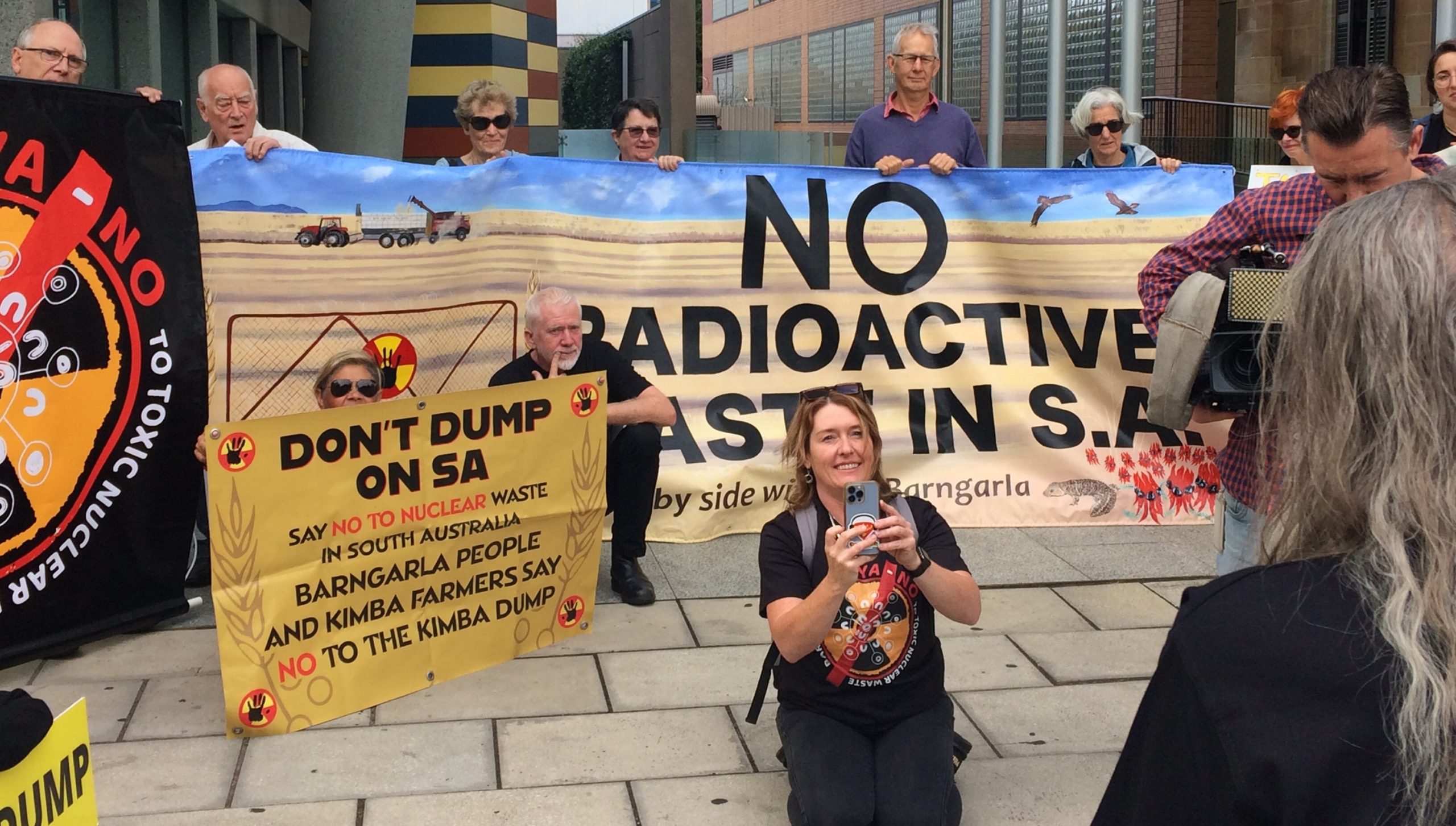
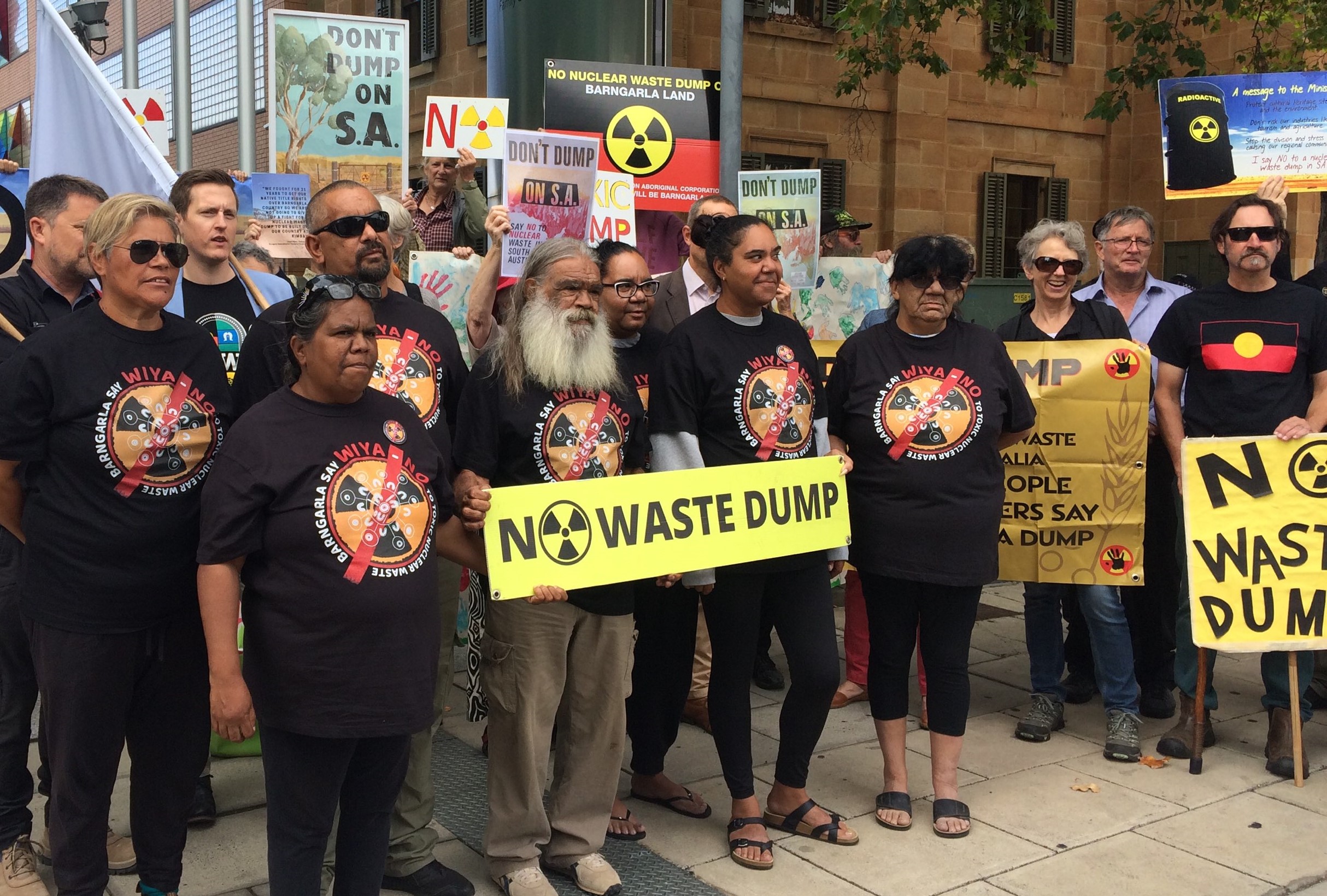
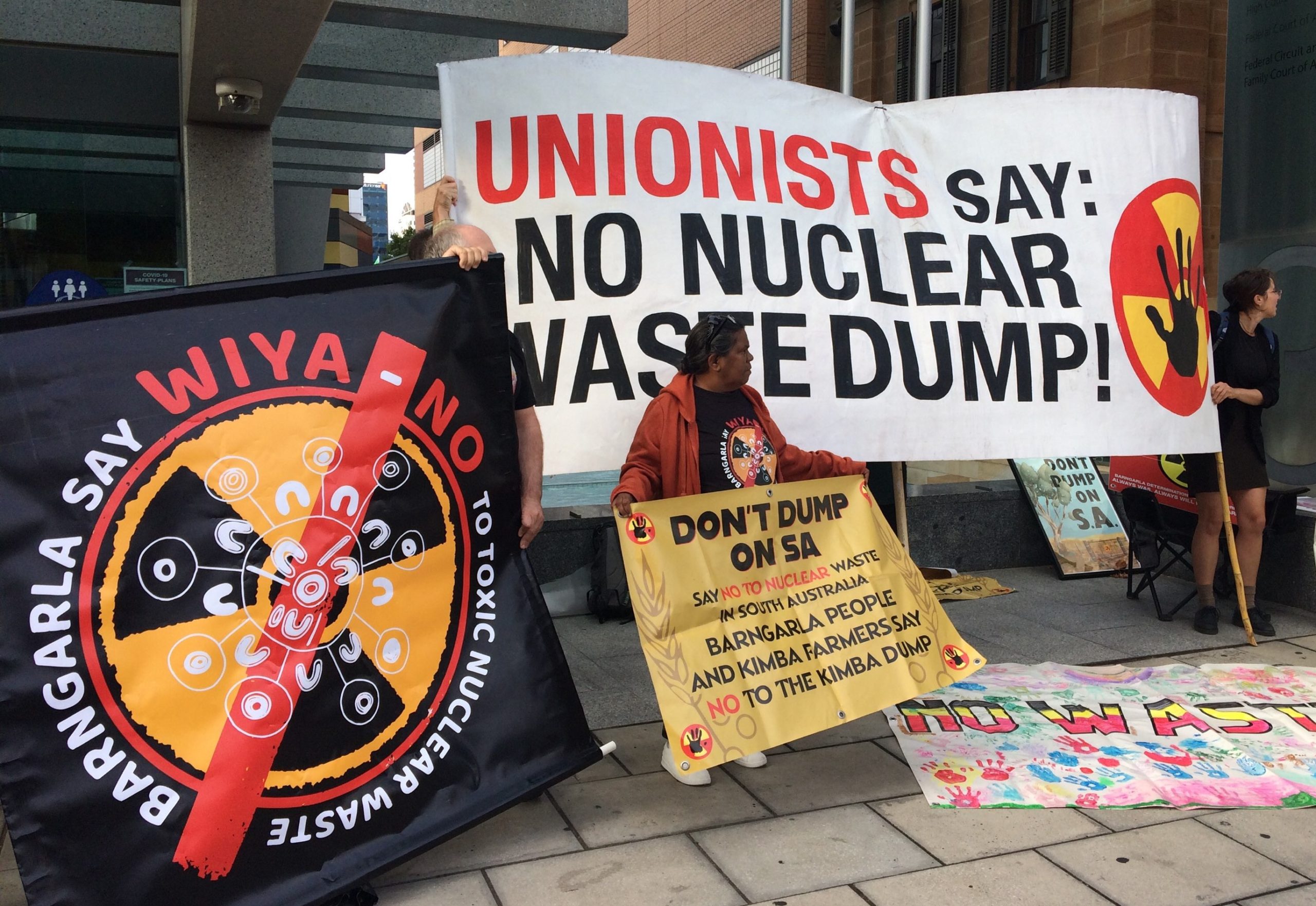
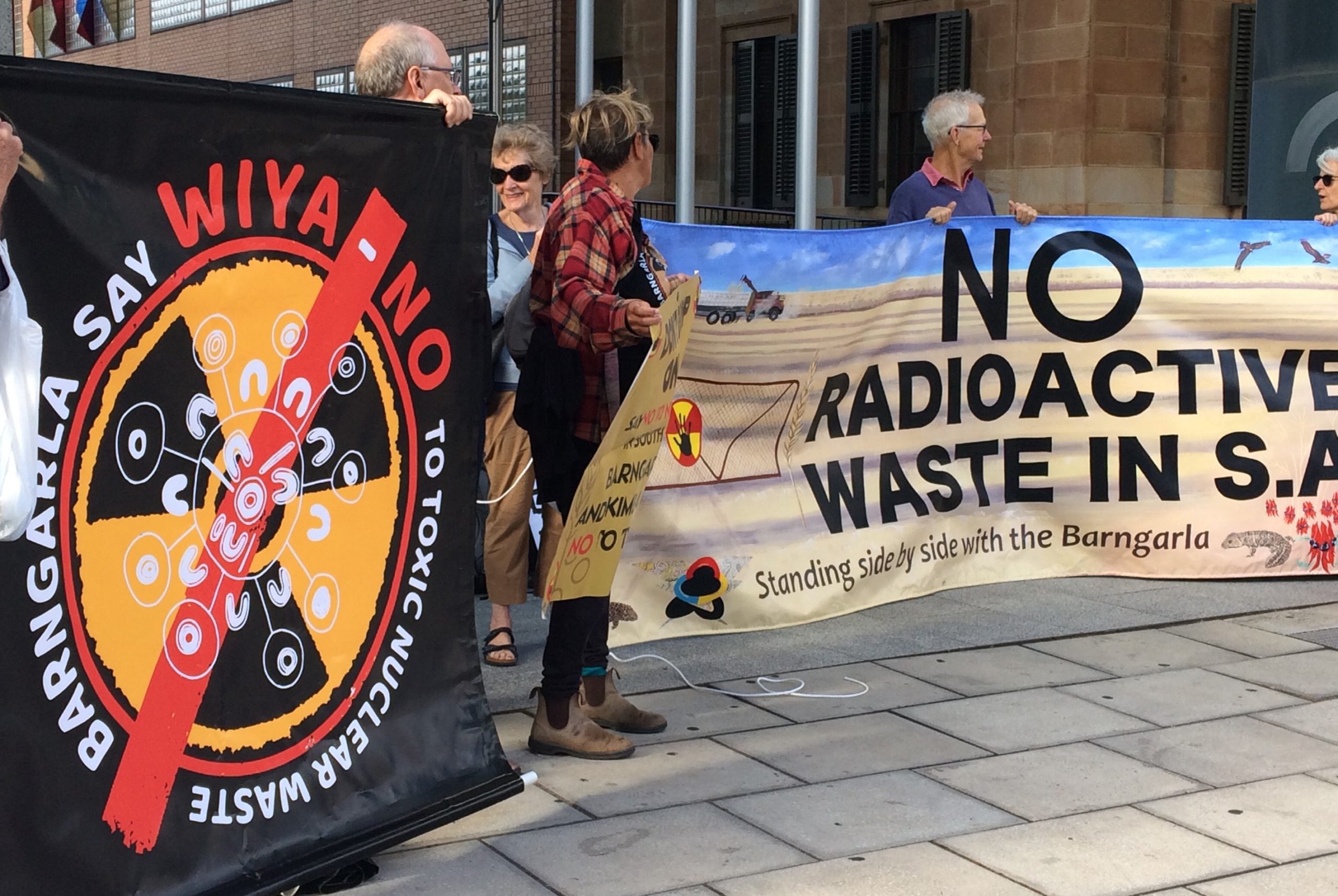
Monday March 6th: People gather at the Federal Court hearing to support Barngarla people
3 Angas St, right next to Victoria Square / Tarntanyangga (south-east cnr of Victoria Square / Tarntanyangga)


Here are some things that you can do to support:


celebrate 50 years of FoE!

This year marks the 50th anniversary of the creation of the first Friends of the Earth group in Australia, one at Adelaide University in 1972.

Next week is Sustainability Week at Adelaide Uni, so with the help of the students there, we’re talking about the early days of FoE in the Unibar  — entry from the Cloisters, level 2 (ground level) —  from 7pm Monday, August 22nd.

We invite Friends to join us for nibbles from 6:30pm. We’ll start the programme at 7pm.

7pm: Introduction and Welcome

then Early days at Adelaide Uni — slideshow by Roman Orszanski, followed by discussion.

7:30 Paul Downton via Zoom talking about a fragment of EcoCity at Christie Walk

8pm Jim Green talking about Chain Reaction and various Anti Nuclear campaigns

8:30 Film about the Barngarla traditional owners fight against the Nuclear waste dump

Zoom talks Mon June 20: Jeremy Miller about adaptation to climate change

Jeremy Miller from AdaptWest talks about adaptation to climate change.

“I’ll aim to give an overview of what is happening across the regional climate partnerships and then focus on the heat mapping as a collaborative project that we have leveraged into different settings. 
I’ll also talk to scenario planning and adaptation pathways and how these represent decisions in time.”

Zoom details:

Topic: FoE meeting
Time: Monday June 20, 2022 6:00pm Adelaide / 6:30 Melbourne

Join Zoom Meeting
https://us06web.zoom.us/j/83397402251?pwd=VzdNdU1PMVAzS3BvR1NaRzIwSkRzdz09

Meeting ID: 833 9740 2251
Passcode: FoE

Housing Crisis Requires Nordic Policy Solutions

From the Australia Institute, Nordic Policy Centre

The key driver of Australia’s acute housing affordability crisis is its over-reliance on just two housing options – private home ownership and private renting.New research from the Australia Institute’s Nordic Policy Centre shows that Nordic countries have a wider repertoire of policies, and Australia can learn from policies that are already in practice in Nordic countries.
Key Findings:

  • In Australia, the proportion of social housing is estimated to have fallen from over 7% of all housing in Australia in the early 1990s down to just 4% in 2019. That proportion needs now to be ramped up to double digits.
  • In Sweden, public housing is more than triple the proportion it is in Australia. Sweden’s housing co-operatives amount to 22% of the total housing stock, while in Norway this figure is 15% nation-wide, but 40% in the capital, Oslo.
  • Sweden, Norway and Denmark also have extensive co-ownership whereby individuals own, use, and control their own dwellings but shared spaces and property are owned jointly and managed collectively with neighbouring members of a housing co-operative, which improves affordability.
  • Finland’s ‘Finnish Housing First Principle’ views housing as a prerequisite that will enable solving a homeless person’s social and health problems, not the other way round.
  • Coupled with the nation’s belief in the notion that people have a right to decent housing and useful social services, this has seen an impressive reduction in homelessness and the current government has a policy to eliminate homelessness by 2027.
  • Finland currently has less than one homeless person per 1,000 people, compared to Australia’s nearly five homeless people per 1,000 people.

“If we are to have any hope of tackling Australia’s housing affordability crisis, policymakers must stop favouring investors over tenants and shift the priority in housing policy to supporting low- and middle-income earners who simply want a secure place to live,” said Professor Andrew Scott, convenor of the Australia Institute’s Nordic Policy Centre.

“It is no secret that housing is expensive in Australia. Buying a house is hard, and being a renter has many of its own problems. Housing policies in Nordic nations prioritise homes to live in, rather than houses as investments.

“The Australian Government should now require some of the collective capital in superannuation funds to be invested in affordable housing to ensure fund members can have an adequate retirement.

“This will strengthen the presence of ethical, not-for-profit private housing developers of the kind which in Denmark have created a rental co-operative sector which provides security of tenure and affordable housing for one-fifth of the nation’s population.

“Finland become the world leader in reducing homelessness due to their emphasis on ensuring homes for people on a basis of need. Australia could learn from Nordic nations who have shown firsthand how housing policy can work to reduce rising homelessness.”
see The Australia institute for the Full report and related articles

(more…)